
You Don’t Need to Write a Single Line of Code to Build a Real Generative AI Career


Why the smartest people in the AI room are usually the ones asking questions, not writing scripts.

Short Summary:
If you’ve ever hesitated to chase a Generative AI career because you’re “not technical enough,” this one’s for you. Most AI projects don’t collapse because the model was weak they collapse because nobody in the room understood the business problem well enough to steer the technology. This blog walks through why non-technical leaders are quietly running some of the most successful GenAI initiatives today, what skills actually move the needle, and how to start building your own Generative AI career even if you’ve never opened a code editor in your life.
📖 What’s Inside This Blog
Quick Navigation
- 01The Day I Realized AI Doesn’t Need You to Be a Coder
- 02Why Most AI Projects Actually Fail (Hint: It’s Not the Model)
- 03The Real Job: Becoming the Bridge Between People and Technology
- 04Start With the Problem, Not the Tool
- 05Building a Team That Doesn’t Pull in Ten Directions
- 06The Technical Vocabulary You Actually Need (Not the Whole Textbook)
- 07Stop Celebrating Launches. Start Celebrating Outcomes
- 08Why Small Wins Beat Big Bets
- 09Communication Is the Real Superpower Here
- 10Managing Expectations Before They Manage You
- 11Getting People to Actually Use What You Built
- 12The Numbers That Actually Prove You Did Something Right
- 13The Leadership Skills Nobody Puts on a Job Description
- 14Where a Generative AI Career Really Begins
- 15Questions People Usually Ask Next
The Day I Realized AI Doesn’t Need You to Be a Coder
A few months ago, I sat in on a conversation with a marketing manager who’d just been handed something new: “lead our GenAI rollout.” No engineering background. No Python. No idea what a vector database even was. Her first reaction was panic the classic “am I even qualified for this?” spiral that stops so many capable people before they start.
Six months later, her team had shipped three working AI tools inside the company, support tickets had dropped, and leadership was asking her to scale the program company-wide. She still couldn’t write a line of code. And it didn’t matter.
That’s the story nobody tells you when you’re weighing whether a Generative AI career is even possible without an engineering degree. The truth is simpler and more encouraging than most people expect.
Why Most AI Projects Actually Fail (Hint: It’s Not the Model)
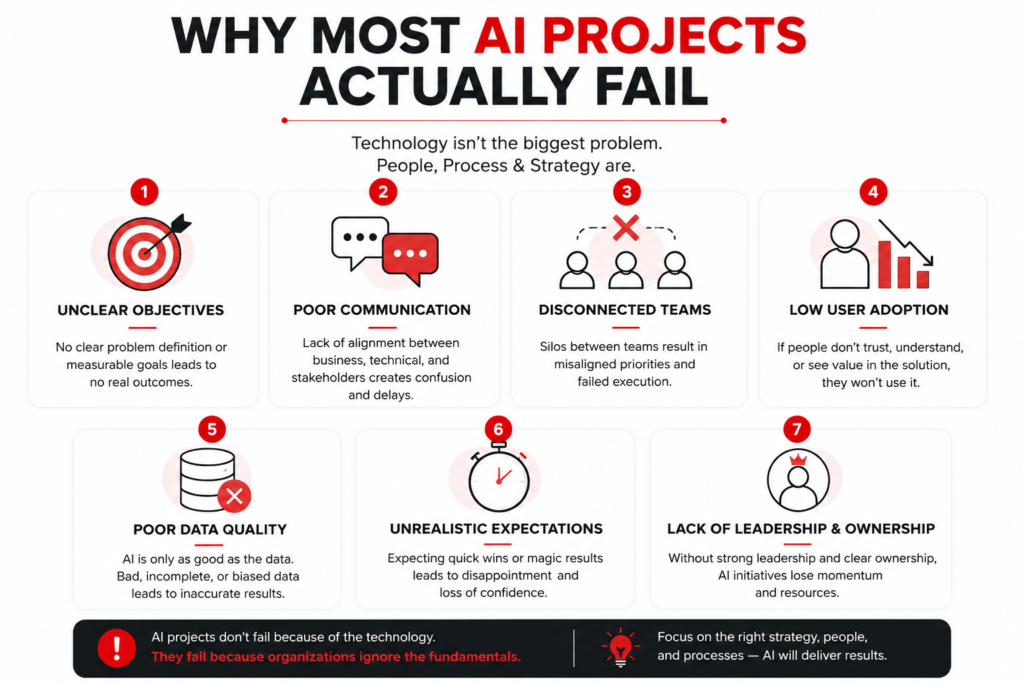
Here’s something the industry doesn’t advertise enough: the models themselves are rarely the bottleneck anymore. Anthropic, OpenAI, Google, and the open-source community have made frontier-level intelligence available to almost anyone with an internet connection. So when AI projects stall or quietly die, the postmortem almost never says “the model wasn’t smart enough.”
It usually says one of these instead:
- Nobody agreed on what problem they were solving
- Teams talked past each other instead of with each other
- Success was never actually defined
- The data feeding the system was messy or incomplete
- People quietly stopped using the tool because nobody managed the change
- Expectations were set by hype, not reality
Every one of those is a leadership gap, not a coding gap. Which is exactly why a Generative AI career built on business judgment, not syntax, tends to age extremely well.
The Real Job: Becoming the Bridge Between People and Technology
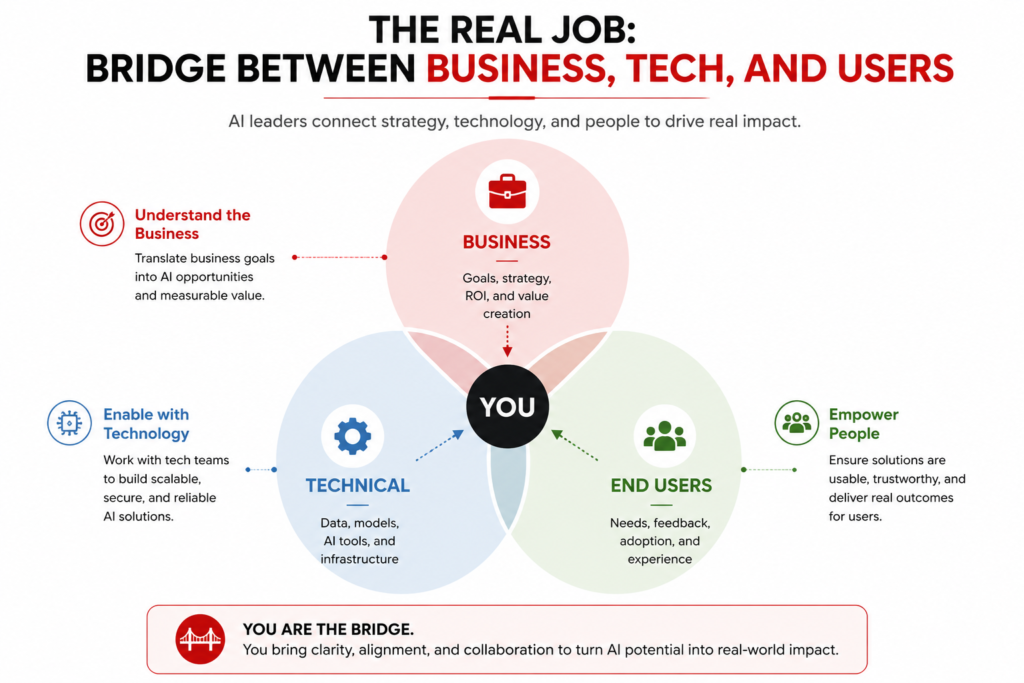
If you strip away the buzzwords, the job description for someone leading GenAI work looks almost old-fashioned. You’re a translator standing between three rooms that rarely speak the same language.
The Business Room
Here, the questions are about money and time: What problem are we actually solving? Why should anyone care? What does success look like in numbers a CFO would nod along to?
The Technical Room
Here, it’s about feasibility: Can we actually build this? Which model fits the use case? What’s the right architecture so it doesn’t fall apart at scale?
The End-User Room
And here, it’s about trust: Does this genuinely make someone’s day easier? Will people actually use it, or will it sit there unused after the demo excitement fades?
Keep these three rooms talking to each other, and momentum builds fast. Let any one of them drift, and the whole initiative slows to a crawl no matter how advanced the underlying model is.
Start With the Problem, Not the Tool
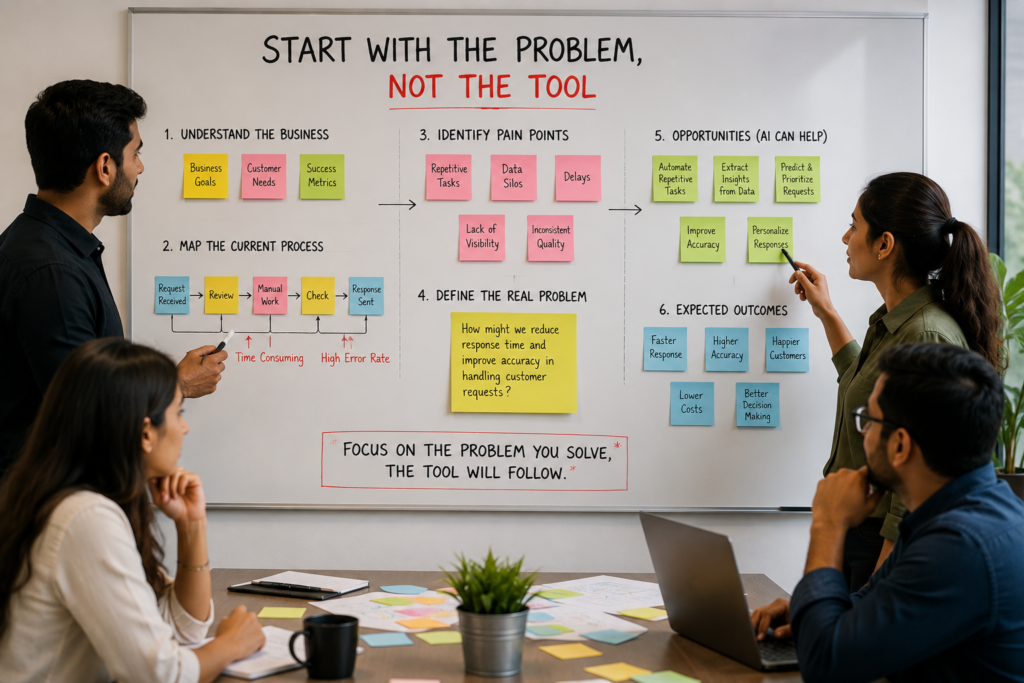
So many teams start in the wrong place. They ask, “Should we build a chatbot?” or “Can we use GPT for this?” questions that put the tool before the problem.
A far better starting question sounds almost boring: “What’s actually costing us the most time, money, or customer goodwill right now?”
Once you answer that honestly, the right AI solution usually reveals itself. Maybe it’s:
- Support teams drowning in repetitive questions
- Sales reps burning hours on proposal drafts
- Marketing teams stuck writing the same content variations on repeat
- HR fielding the same policy question fifty times a week
- Operations manually pushing paperwork through a document pipeline
Anyone building a serious Generative AI career learns to fall in love with the problem, not the technology. The tool comes second, always.
Building a Team That Doesn’t Pull in Ten Directions
You’ll rarely lead this work alone. A typical GenAI initiative pulls together AI engineers, data scientists, UX designers, product managers, marketers, compliance officers, and customer success teams each with a completely different definition of “done.”
Your value isn’t in outworking any of them technically. It’s in making sure all of them are rowing toward the same, clearly measurable outcome instead of quietly optimizing for their own department’s version of success.
The Technical Vocabulary You Actually Need (Not the Whole Textbook)
You don’t need to become an engineer to lead one. But there’s a working vocabulary worth learning so you can ask sharper questions in the room things like large language models, prompt engineering, retrieval-augmented generation, embeddings, vector databases, AI agents, the difference between fine-tuning and prompting, hallucinations, context windows, token limits, guardrails, and APIs.
Notice what’s missing from that list: how to build any of it yourself. You need to know what each concept does and when it matters not how to implement it from scratch. That’s enough to make smart strategic calls, spot a bad technical decision before it costs you months, and hold your own in a room full of engineers.
Stop Celebrating Launches. Start Celebrating Outcomes
“Did the chatbot launch?” is the wrong question to be proud of answering. Launching is easy. What actually matters is what happened after.
Ask instead: Did support tickets actually drop? Did customer satisfaction move? How many hours did the team genuinely get back? What’s the return on the investment? Are people actually opening the tool a week later, or did it die quietly after the demo?
Business impact always outweighs feature completion. A tool nobody uses is not a win, no matter how impressive the launch slide looked.
Why Small Wins Beat Big Bets
Ambitious, company-wide AI transformations sound exciting in a strategy deck and they’re exactly where most initiatives quietly die. The teams that actually build lasting momentum start small: AI-generated meeting summaries, faster email drafting, a marketing content assistant, an internal knowledge bot, automated FAQ handling.
Small, visible wins earn trust. Trust earns budget. Budget earns the next, bigger project. Skip the small wins and you’re asking stakeholders to bet the farm on something they’ve never seen work.
Communication Is the Real Superpower Here
Technical experts naturally reach for technical language. Business stakeholders think in outcomes, not architecture. Someone leading a Generative AI career path has to live in the translation gap between those two.
Don’t say: “We’re implementing Retrieval Augmented Generation.”
Say: “Employees will get more accurate answers because the AI checks our own documents before responding.”
Simple language doesn’t dumb anything down. It builds confidence and confidence is what gets a project funded past its first pilot.
Managing Expectations Before They Manage You
Generative AI is genuinely powerful. It is not magic, and pretending otherwise is how trust gets burned. Talk openly, early, and often about accuracy limitations, the need for human review, data privacy, security, compliance requirements, and the reality that models keep improving meaning today’s version isn’t the final version.
Transparency, even when it’s a little uncomfortable, is what keeps stakeholders on your side when something inevitably needs adjusting.
Getting People to Actually Use What You Built
Technology on its own changes nothing. People change things or refuse to. Treat adoption like its own product launch: training sessions, ready-made prompt libraries, documented best practices, internal success stories, a few enthusiastic internal champions, and real feedback loops that show people you’re listening.
Skip this step and even a brilliant tool ends up as an expensive, unused line item.
The Numbers That Actually Prove You Did Something Right
Track what genuinely matters instead of vanity metrics. That usually means: hours saved and tasks automated on the productivity side; revenue impact, cost reduction, and conversion lift on the business side; satisfaction scores, adoption rate, and active usage on the experience side; and accuracy improvement, error reduction, and compliance adherence on the quality side.
These numbers are what turn a promising pilot into a company-wide priority.
The Leadership Skills Nobody Puts on a Job Description
Look at the people actually succeeding in this space, and a pattern emerges. It’s rarely raw coding ability. It’s strategic thinking, problem solving, communication, stakeholder management, sound decision-making, prioritization, change management, and a genuine appetite for continuous learning.
These are timeless leadership skills Generative AI just raised how valuable they are. Which is good news for anyone building a Generative AI career without a computer science degree: the skills that matter most were probably ones you were already building in your current role.
Where a Generative AI Career Really Begins
Here’s my honest take after everything above: you don’t need to be the smartest engineer in the room. You need to be the person who keeps everyone aligned around solving the right problem and that’s a skill you can deliberately build, not something you’re born with.
The gap most people actually need to close isn’t a coding gap. It’s a fluency gap understanding enough about how these tools work, how they get evaluated, and how they get adopted inside real companies, so you can lead with confidence instead of guessing.
That gap is exactly what a good training program is built to close and it’s worth being picky about who you learn it from.
Ready to Build Your Own Generative AI Career?
Most institutes teach AI concepts. SkillMove was built differently. Our curriculum is designed with insights from recruiters through our sister company LN Teks, helping align learning with the skills companies actively hire for today. Every program integrates Claude, Generative AI tools, Prompt Engineering, AI automation, and real-world workflows so learners become AI-ready through practical experience—not just theory.
Why Choose SkillMove?
- Built with recruiter insights, not assumptions
- AI-first curriculum across every program
- Hands-on projects using modern Generative AI tools
- Placement assistance and career guidance
- Strong alumni and referral-driven community
- Focused on job outcomes, not just certificates
“Built by Recruiters. Backed by Placements.” Skill Is Built. Your Career Is Next.
Start learning with industry-relevant AI skills designed to help you become job-ready in the era of Generative AI.
Questions People Usually Ask Next
Frequently Asked Questions
Everything you need to know before starting your Generative AI career.